
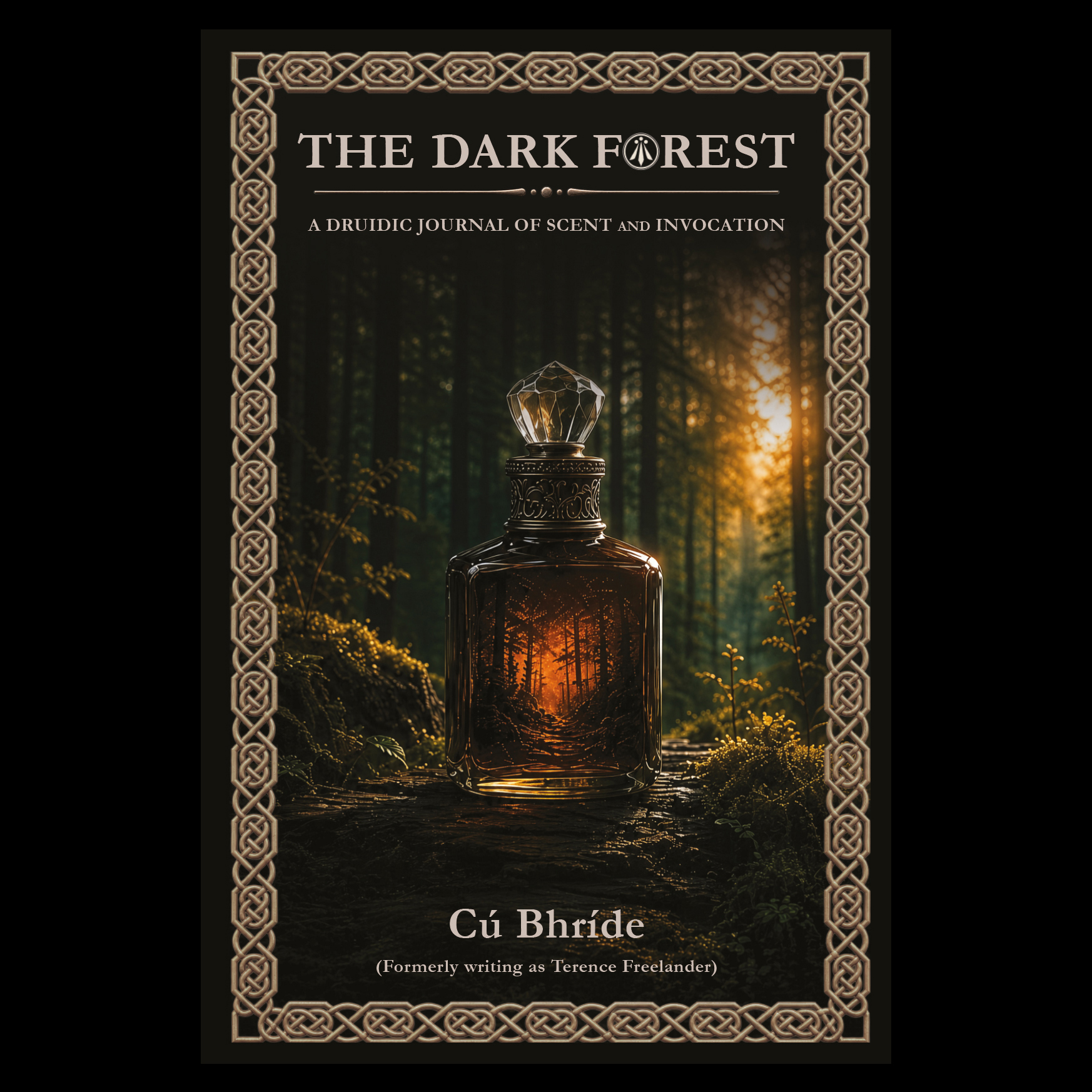
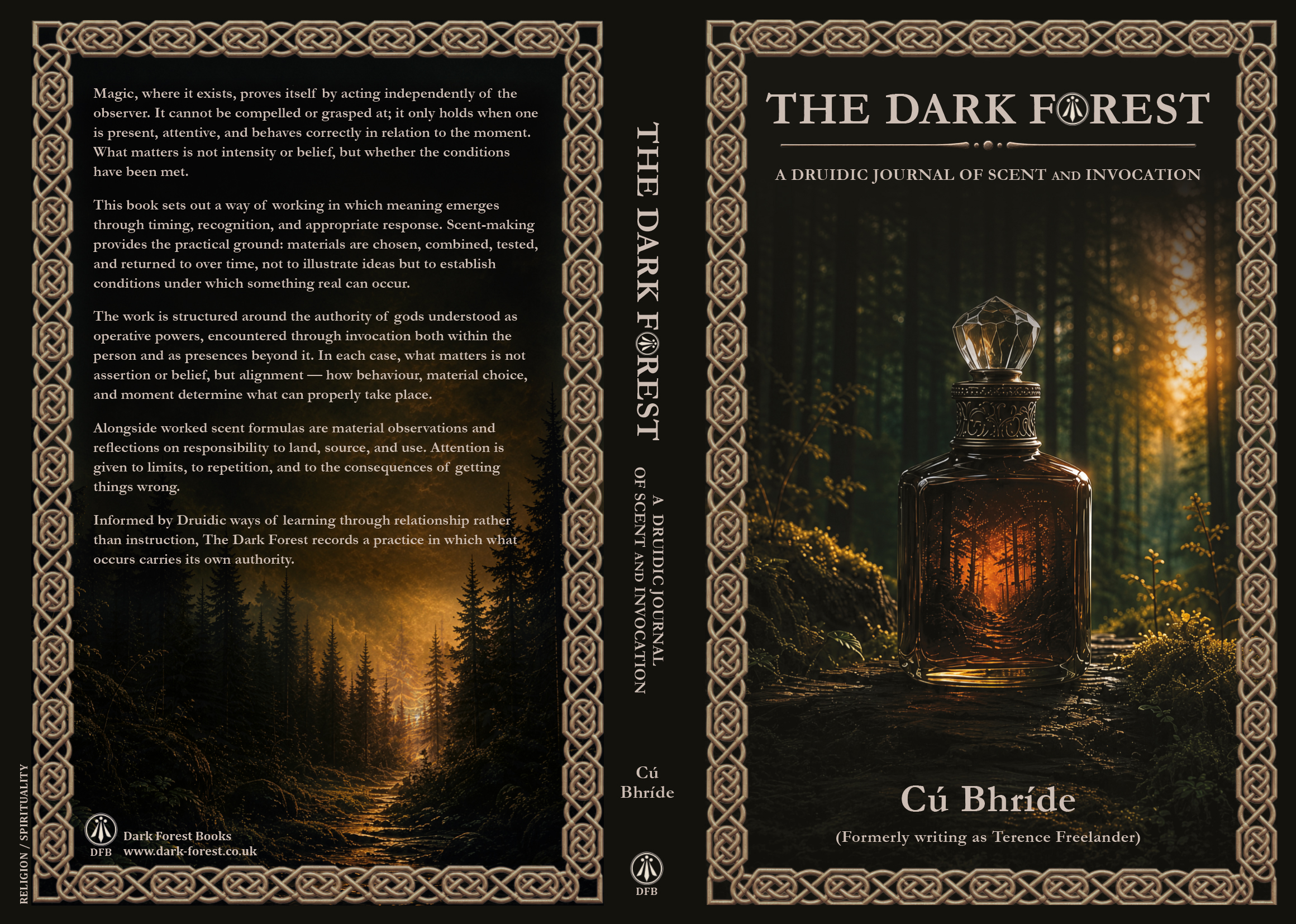
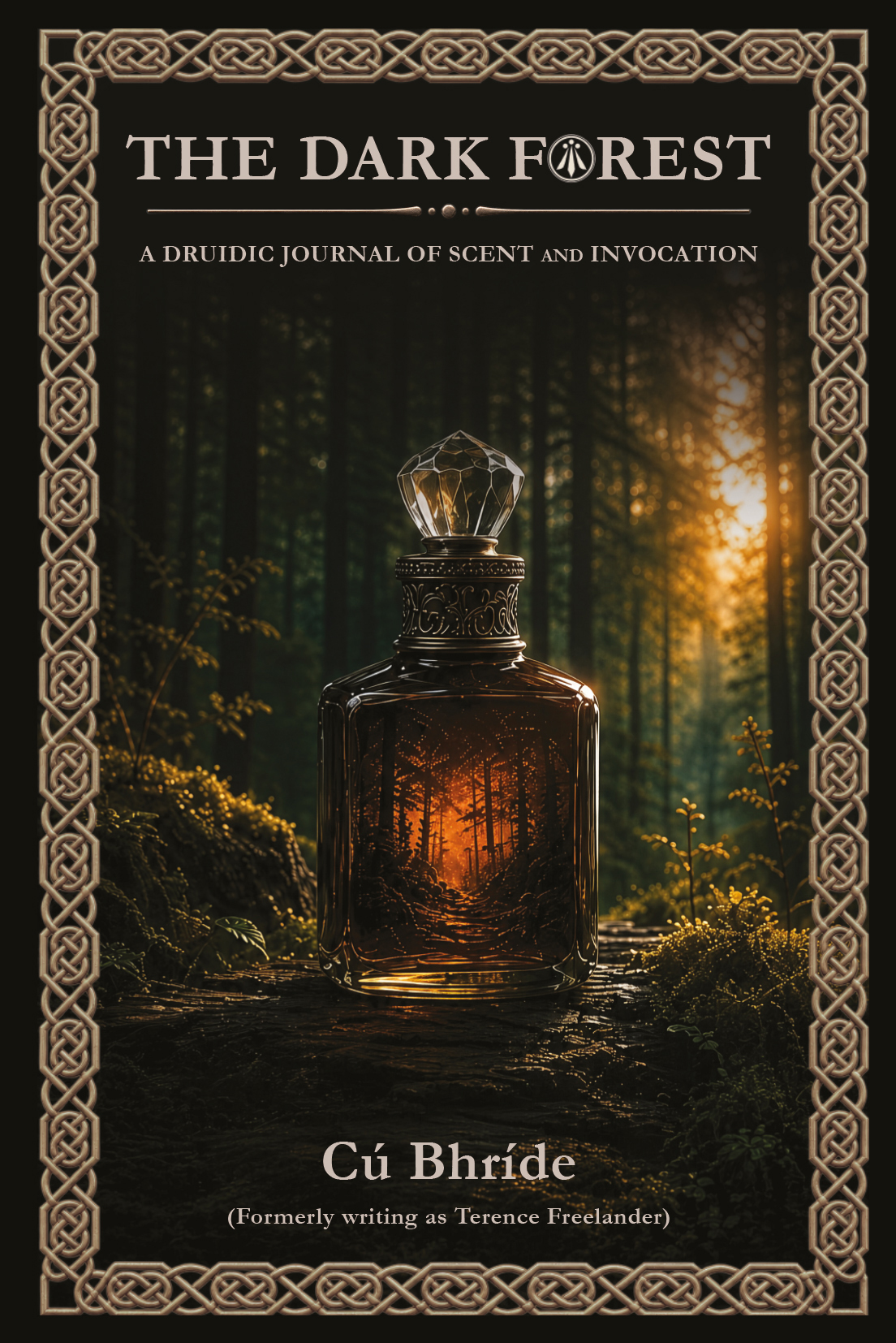
Description
This book is about the making of aromatics as a devotional craft — one rooted in druidry, shaped through god-invocation, and guided by an understanding of Awen as something that arrives rather than something that is claimed. It begins where explanation has not yet formed, tracing how certain presences first made themselves known through atmosphere, memory, and bodily response. From the outset, scent is treated as a working medium: something made by hand, refined through time, and capable of carrying relationship.
Awen is approached not as inspiration in the modern sense, but as a condition that emerges when timing, material, and attention are properly aligned. Druidry enters as a lived orientation toward land, season, and right action. Gods are encountered through invocation, restraint, and continued practice rather than symbol or story. Ogham sits in the work as a grammar of relationship, guiding attention toward land, season, and limit without ever becoming display. Aromatic making becomes the means by which these relationships are tested and clarified — not in moments of spectacle, but through repetition, refusal, and return.
As the work unfolds, intuition gives way to structure. Early experiments are shaped into systems that can endure use and time. Materials resist. Limits impose themselves. Through that resistance, a coherent aromatic practice takes form — one aligned to specific gods, grounded in landscape, and governed by discipline rather than excess. The book records the making of these systems in detail, alongside the boundaries that preserve their integrity.
Scent functions throughout as a practical language for memory, threshold moments, and the presence of place. The reader is invited into the discipline of making: into the choices, exclusions, and responsibilities that shape devotional work when it is taken seriously. Nothing is offered as universal or prescriptive. What is shared is a faithful account of how practice deepens when it is allowed to mature rather than perform.
This is a book for readers who recognise restraint as intelligence, refusal as knowledge, silence as structure, and craft as devotion without theatre. It does not seek to persuade or instruct. It offers a path already walked, and leaves the reader free to decide how — or whether — to follow.
Reviews
There are no reviews yet.